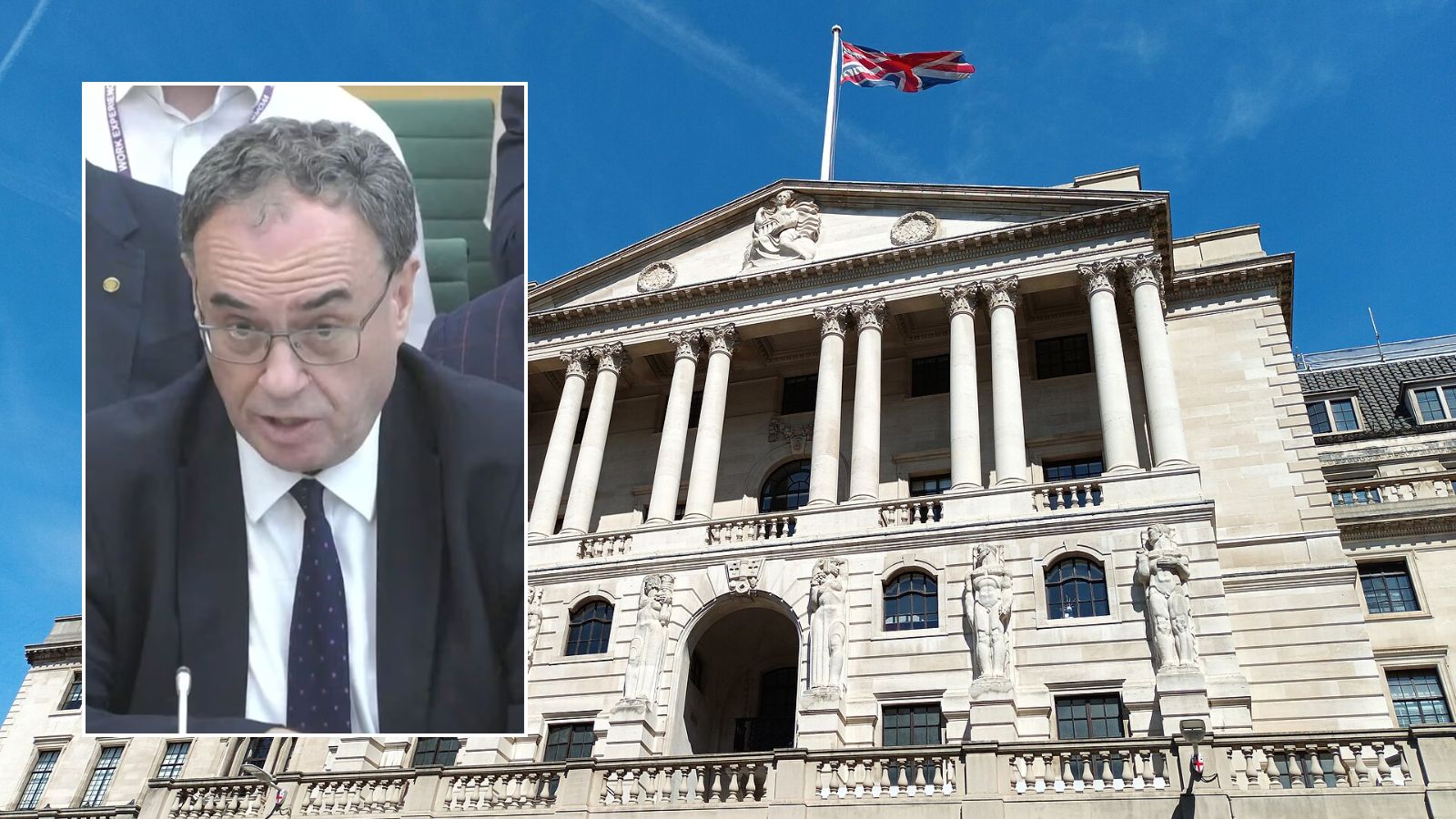
Interest rates could rise four times before next July, with the Bank of England forced into action to keep down inflation.
Market traders are preparing for several rounds of intervention from the central bank’s Monetary Policy Committee due to surging costs caused by the Iran war and continued growth of the UK economy.
Moves in the market come after figures published on Friday showed the economy grew faster than expected in July.
Office of National Statistics data pointed to 0.4 per cent growth in GDP, whereas analysts had planned for no increase.
Traders are now anticipating the base rate of interest to rise from the current 3.75 per cent to 4.75 per cent by next July.
Senior UK economist at Berenberg, Andrew Wishart, said the growth meant there was likely now more room for the Bank of England to act on interest rates than previously thought.
Wishart said: “Evidence that the economy could cope with a solitary quarter point interest rate hike adds to the risk that the Bank of England will deliver one in November or December.”
Chief UK economist at Pantheon Macroeconomics Rob Wood added: “Growth data show that rate setters are, in our view, well off course if they are assuming that interest rates are in a restrictive territory.”
Reacting to July’s growth figures, Chancellor John Healey struck a cautionary note.
While hailing the UK’s economy for “demonstrating a welcome resilience, despite serious global uncertainty”, he warned the impact of the Iran war meant inflation could still continue to rise.
“Our growth, although still fragile, was the fastest in the G7 in the first half of the year,” he added.
“But, the conflict in the Middle East does have impacts here at home – from the cost of the weekly family shop to the cost of government borrowing.”
The Bank of England’s Monetary Policy Committee – chaired by Governor Andrew Bailey – will determine whether to alter the base rate of interest when it next meets on Thursday.
Analysts are anticipating the base rate to remain at 3.75 per cent after the next meeting, with increases more likely later in the year.
However, the Bank’s Chief Economist, Huw Pill, urged earlier this month for the rate to rise sooner rather than later.
He said taking action now could prevent a more drastic and long lasting higher interest rates down the line.
Pill explained while speaking to the Edinburgh Chamber of Commerce: “Implemented and communicated effectively, a prompt increase in Bank Rate may serve to head-off some of the potential insidious ‘catch up’ nominal dynamics that threaten to make temporary departures of inflation from target more persistent.”